
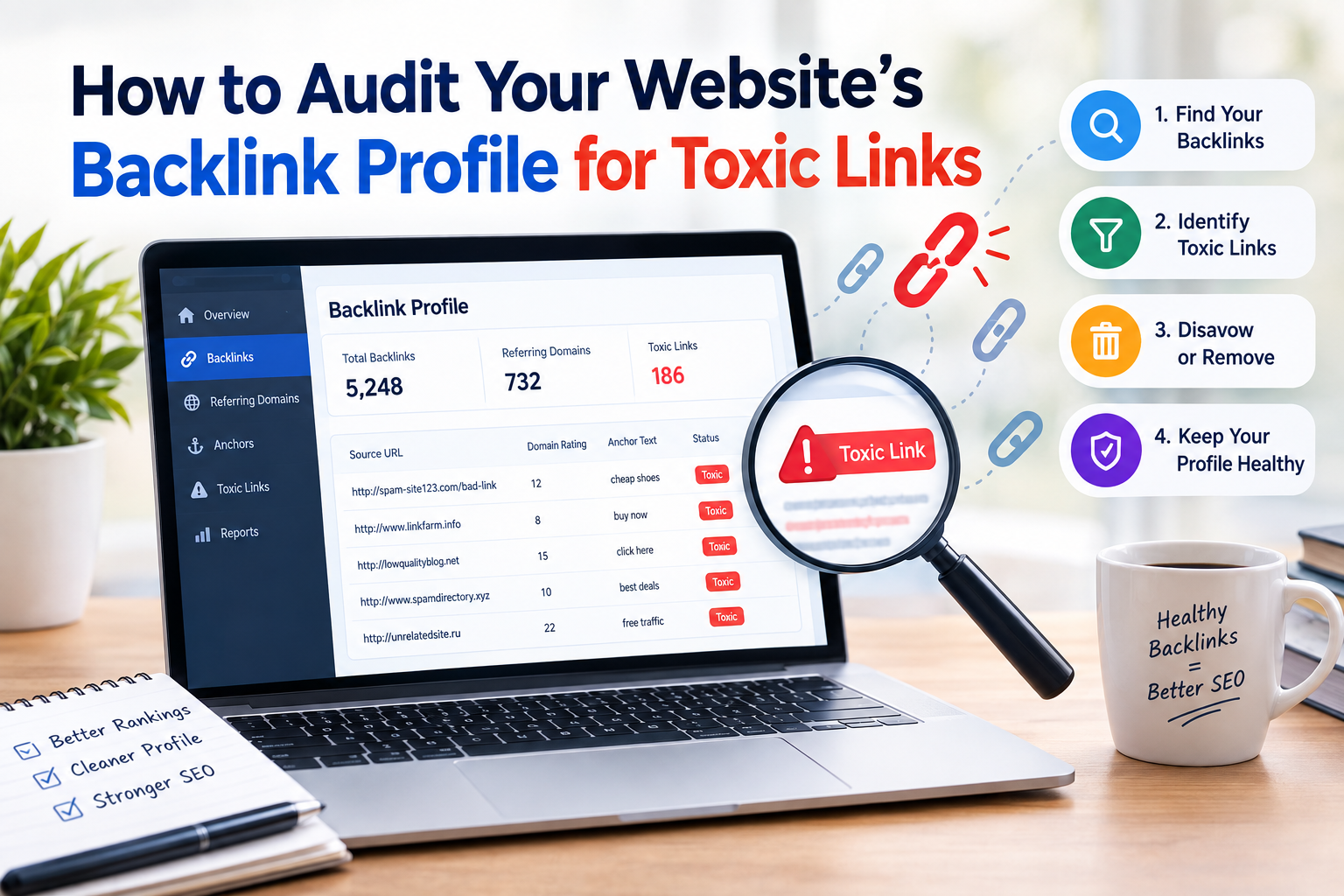
Backlinks can help search engines find and understand your website. Not all backlinks are equal. Some deserve attention than others.
A backlink audit helps you see which websites link to your domain, where those links go and whether something unusual is happening that needs a look.
Website owners should be careful about calling every low-quality backlink “toxic.” A link from an low-authority site does not automatically hurt your website.
What Is a Backlink Audit?
A backlink audit is a review of all the links coming from websites to your own website.
You can check:
- Referring domains
- Linking pages
- Anchor text
- Link attributes
- Target URLs
- Domain relevance
- link patterns
Popular SEO platforms can collect and analyze this data for you.
- Create a Complete Backlink List
Start by gathering backlink data using trusted SEO tools.
Export the information. Organize it into a spreadsheet.
Use these columns:
| Field | What to Check
| Referring domain Which site is linking to you |
| Linking page | The exact page with the link |
| Target URL | The page you’re being linked to
| Anchor text | The text used in the link
| Link attribute | Follow, nofollow or other |
| Relevance | Is the site related to your field? |
| Notes | Why this link needs review
- Identify Suspicious Patterns
Look for patterns of judging each link on its own.
Watch for:
- A sudden large number of unrelated links
- links using the same keyword-heavy anchor text
- Automated link pages that look fake
- Links from hacked or compromised sites
- Sitewide links from irrelevant domains
- Sudden spikes in backlink growth
These signs are worth investigating but they don’t always mean a penalty is coming.
- Check Anchor Text
Anchor text shows how someone else describes your page.
A healthy backlink profile mixes types of anchor text:
- Brand names
- URLs
- Generic phrases
- Descriptive terms
Too many exact-match commercial keywords can be a red flag. Especially if the links look fake.
- Evaluate Referring Domains
Don’t judge links by domain metrics from tools.
Visit sites when needed. Ask:
- Is the site real?
- Does it have content?
- Is it related to your industry?
- Does the linking page make sense?
- Does the site seem built just to get links?
Context matters a lot.
- Look for Links You Can Control
If you find a link you created or arranged see if you can remove or fix it.
For example if your company once paid for a directory listing or joined a link network contact the site. Ask for removal.
Should You Disavow Backlinks?
Disavowing links is not something you should do lightly.
A suspicious link does not mean Google sees it as harmful. Search engines often ignore low-quality links.
Before taking action understand why the link exists. Look for a pattern of artificial link building.
If your site has a history of links consult an SEO expert.
Build Better Links of Chasing Every Bad Link
The goal shouldn’t be to remove every bad link you don’t like.
Focus on earning links by creating:
- Original research
- Useful guides
- Industry resources
- Digital PR content
- Expert contributions
- Data-driven articles
- Valuable tools
Great content naturally attracts relevant references.
Final Thoughts
A backlink audit works best when done step by step.
Review patterns check context look at referring domains. Analyze anchor text before acting.
Don’t panic over every link.
Focus, on evidence. Keep your link profile natural and relevant.


