
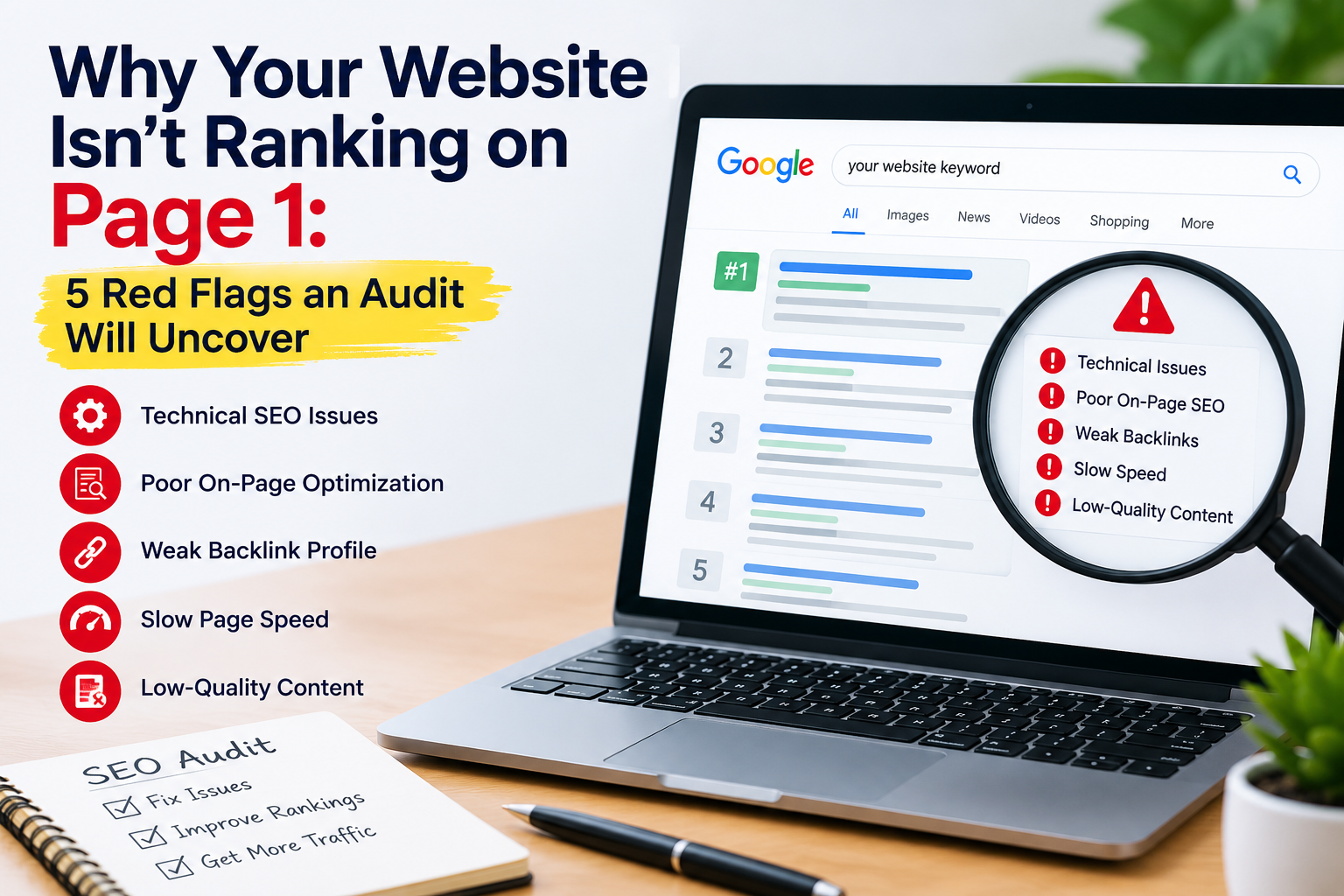
Getting a website onto Google’s page takes more than publishing articles and adding keywords. If your website is stuck on page two three or even lower it may have hidden SEO problems that keep it from doing
Some ranking issues are obvious while others stay hidden until you run an SEO audit.
An audit looks at performance, content quality, website structure, backlinks and search visibility. Below are five important red flags to check when your website refuses to reach page one.
- Important Pages Aren’t Being Indexed
One of the things to look at is whether Google can actually index your pages.
A page cannot bring search traffic if search engines are kept from crawling or indexing it.
Common causes include:
- noindex tags
- Incorrect robots.txt rules
- tags pointing elsewhere
- Server errors
- Duplicate URLs
- Weak internal linking
- Pages that are hard for crawlers to find
What an Audit Can Uncover
An SEO audit can find pages that are blocked excluded, duplicated, redirected or otherwise unavailable for indexing.
Google Search Console is especially useful for checking indexing status and spotting issues that affect URLs.
If an important landing page is not indexed, fixing that problem should come before making small on‑page changes.
- Your Content Doesn’t Match Search Intent
Having the right keyword is not enough.
Google users search for information because they have a goal. They may want to learn something, compare products find a service solve a problem or make a purchase.
If your page does not satisfy the underlying search intent it may struggle when the target keyword appears throughout the content.
For example someone searching for a beginner’s guide may expect an article. A product‑focused sales page may not provide what they are looking for.
Signs of an Intent Problem
An audit should examine:
- What users appear to expect from the query
- The format of pages that rank for the keyword
- Whether your content answers the question
- Whether important subtopics are missing
- Whether the page is too broad or too narrow
The goal is not to copy competing pages. Instead understand the information users need and make your page truly useful.
- Your Website Has Technical SEO Problems
Technical SEO issues can stop content from reaching its potential.
Some problems are visible to users. Many happen behind the scenes.
An audit should look for:
- Slow‑loading pages
- usability problems
- Broken internal links
- Redirect chains
- Duplicate
- Incorrect canonical tags
- XML sitemap errors
- HTTPS inconsistencies
- JavaScript rendering issues
- Crawlability problems
Why Technical SEO Matters
Search engines need to discover, crawl render and understand your website.
If technical barriers interfere with that process improving your content alone may not fix the problem.
Regular technical checks can help ensure search engines can access the pages you want to rank.
- Your Internal Linking Is Weak
Internal links are often overlooked during SEO campaigns.
When relevant pages link to one another they help users navigate your website and help search engines understand relationships between pieces of content.
For example a detailed blog post about SEO could naturally link to related pages covering:
- SEO audits
- Keyword research
- On‑page SEO
- Website performance
- Link building
Red Flags to Look For
An audit may uncover:
- pages with very few internal links
- Broken internal links
- Pages with excessive links
- Unclear anchor text
- Orphan pages
- Important content buried several clicks deep
A strong internal‑linking structure makes your website easier to navigate and helps distribute authority across relevant pages.
- Your Website Lacks Strong, Relevant Authority
Competition is another factor to investigate.
Even if your website is technically healthy and your content is useful competing pages may have signals of relevance and authority.
This does not mean collecting many backlinks as possible.
A useful audit should examine the quality and relevance of your existing link profile.
Look for:
- Relevant referring domains
- Links pointing to pages
- or lost backlinks
- Unnatural‑looking link patterns
- Opportunities for earning relevant mentions
- Quality Matters More Than Quantity
One relevant editorially earned link can be more useful than many low‑quality links.
Your broader SEO strategy should focus on creating content that earns references, partnerships, mentions and links, from websites.
How an SEO Audit Helps
An SEO audit should not just give a list of errors. The real value comes from finding which problems limit your website and deciding what needs attention first.
A practical order is:
- Resolve indexing and crawlability problems.
- Fix broken pages and critical technical errors.
- Improve content that does not satisfy search intent.
- Strengthen linking.
- Build authority through content and legitimate outreach.
This helps teams avoid spending weeks fixing metadata issues while major problems remain unresolved.
Final Thoughts
If your website is not ranking on page one the problem may not be a keyword or meta description.
An SEO audit can reveal issues involving indexing, search intent, technical performance, internal linking and website authority.
Of making random SEO changes use an audit to identify the real obstacles and prioritize improvements based on their potential impact.
A healthier website structure, content, strong technical foundations and relevant authority can give your pages a chance to compete for organic search visibility.


