
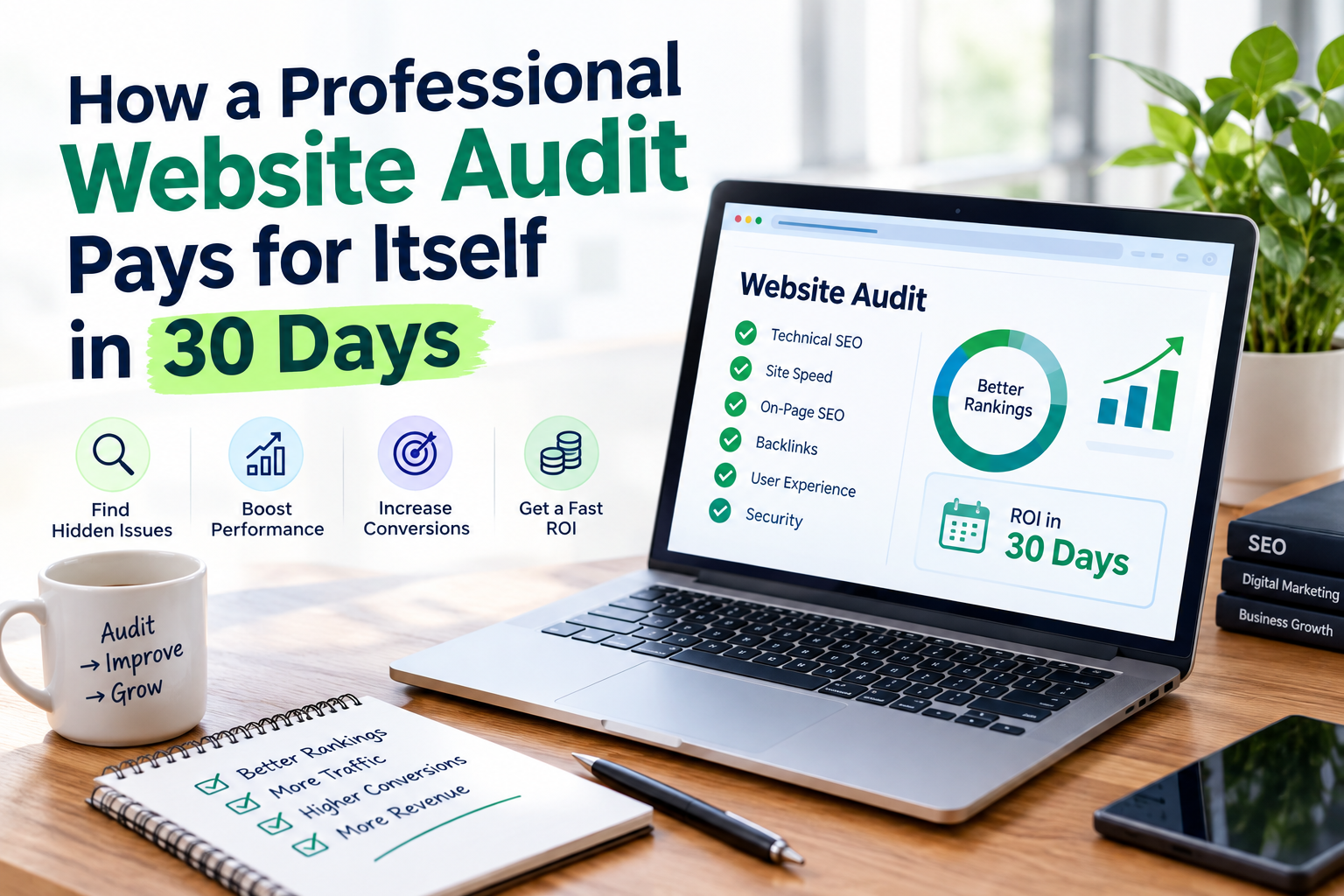
A website is often one of the important things a business has. It’s not a digital space. It’s a tool that can bring in customers build trust and drive sales.. Even a well-designed website can start to have problems over time. These issues might include errors, SEO problems, broken links, slow loading pages or things that make it hard for visitors to take action. These problems don’t always show up away. They can grow quietly. Hurt performance without anyone noticing.
That’s where a professional website audit comes in. This is a way to look closely at the website and find what’s not working. The purpose is not to create a report. The purpose is to find problems and fix them in a way that leads to better results.
So what does a professional audit actually cover?
It can include a check of many areas:
- Technical SEO – things like site structure, indexing and crawl errors
- On-page SEO – titles, meta descriptions, headers and keyword use
- Website speed – how fast pages load on desktop and mobile
- Mobile usability – how the site works on phones and tablets
- User experience – is it easy to find what you need?
- Conversion paths – how well does the site guide visitors to actions?
- Content quality – is the content clear, helpful and updated?
- Internal links – are pages connected properly?
- Backlinks – are other websites linking to you in a good way?
- Analytics – are you tracking the right data?
- Security and technical issues – are there risks like malware or outdated software?
The exact list depends on the website. What the business wants to achieve.
Now let’s look at how a good audit unfolds over time.
Days 1–5: Find the Problems
This is the discovery phase. An auditor will go through the site. Look for issues. Some common ones include:
- Pages that don’t load
- Search engines not seeing pages
- Slow images or scripts
- Missing title tags or descriptions
- Duplicate content
- Poor internal linking
- Problems on mobile devices
- Weak or unclear calls to action
At this stage the goal is not to fix anything yet. It’s to identify everything that needs attention. The business can then separate problems from things that can wait.
Days 6–10: Decide What to Fix First
Not all problems are equal. Some may affect hundreds of visitors. Others may only affect a few. Some are quick to fix. Others take a lot of time.
A good audit helps the business decide what to fix by looking at:
- How much impact the fix will have on the business
- How many people are affected
- How much effort it will take to fix
For example fixing a broken sign-up button might bring in more leads fast.. Rewriting a low-traffic blog post might take time and not make a big difference. Prioritizing this way keeps teams from wasting time on changes while ignoring big issues.
Days 11–20: Make the Changes
Now comes the action phase. The team starts working on the priorities. This might include:
- Speeding up pages
- Fixing broken links
- Repairing contact forms
- Making navigation clearer
- Improving mobile views
- Updating key landing pages
- Stronger calls to action
- Fixing SEO problems
The goal is to remove anything that stops people from using the site the way it should. If a visitor can’t find the information or can’t complete a purchase that’s a problem. Fixing it is the point.
Days 21–30: See What Changed
After changes are made the results should be measured. This is the moment when the work starts to pay off. Tracking success means looking at the metrics. These might include:
- traffic from search engines
- Number of leads
- Form submissions
- Sales revenue
- Conversion rate
- Engagement time
- Search visibility
- Page performance
It’s important not to focus on just one number. For example more traffic is good –. Only if that traffic turns into customers. If traffic goes up but sales stay the same something is still wrong.
Here’s a simple example of how this can work:
Imagine a business gets 2,000 visitors per month and gets 40 leads.
After a website audit improvements help get 5 qualified leads each month.
If each lead is worth $100 that’s a $500, per month.
This is not a promise. It’s an example. The real return depends on the business, industry, quality of traffic and how much each customer is worth.
Why a Professional Audit Can Make a Difference
Business owners often know their websites well. That can be a disadvantage. They might overlook problems because they already know how everything works. They don’t see the site the way new visitors do.
An outside auditor brings an eye. They don’t have ideas. They can spot things the team missed. They also connect details to business goals. They can separate issues from real problems that hurt revenue.
The Audit Is Not Over When the Report Is Done
A long PDF full of suggestions is not enough. A report is the beginning. The real value comes when the team acts on the findings and measures the results.
A good audit should clearly explain:
- What is wrong
- Why it matters to the business
- How to fix it
- Who should do the work
- What to prioritize
- How to measure success
Final Thoughts
A professional website audit can pay for itself quickly. If it uncovers problems that hurt leads, sales, visibility or user experience fixing them can make a difference.. There’s no magic 30-day guarantee. Success depends on how the business uses the audit.
The best way is to find problems rank them by impact make changes and then track the results. An audit is not a technical check. It’s a plan to improve one of the most important tools a business has. A website is not a digital address. It’s a business asset.. Like any asset it needs regular care to keep working well.


