
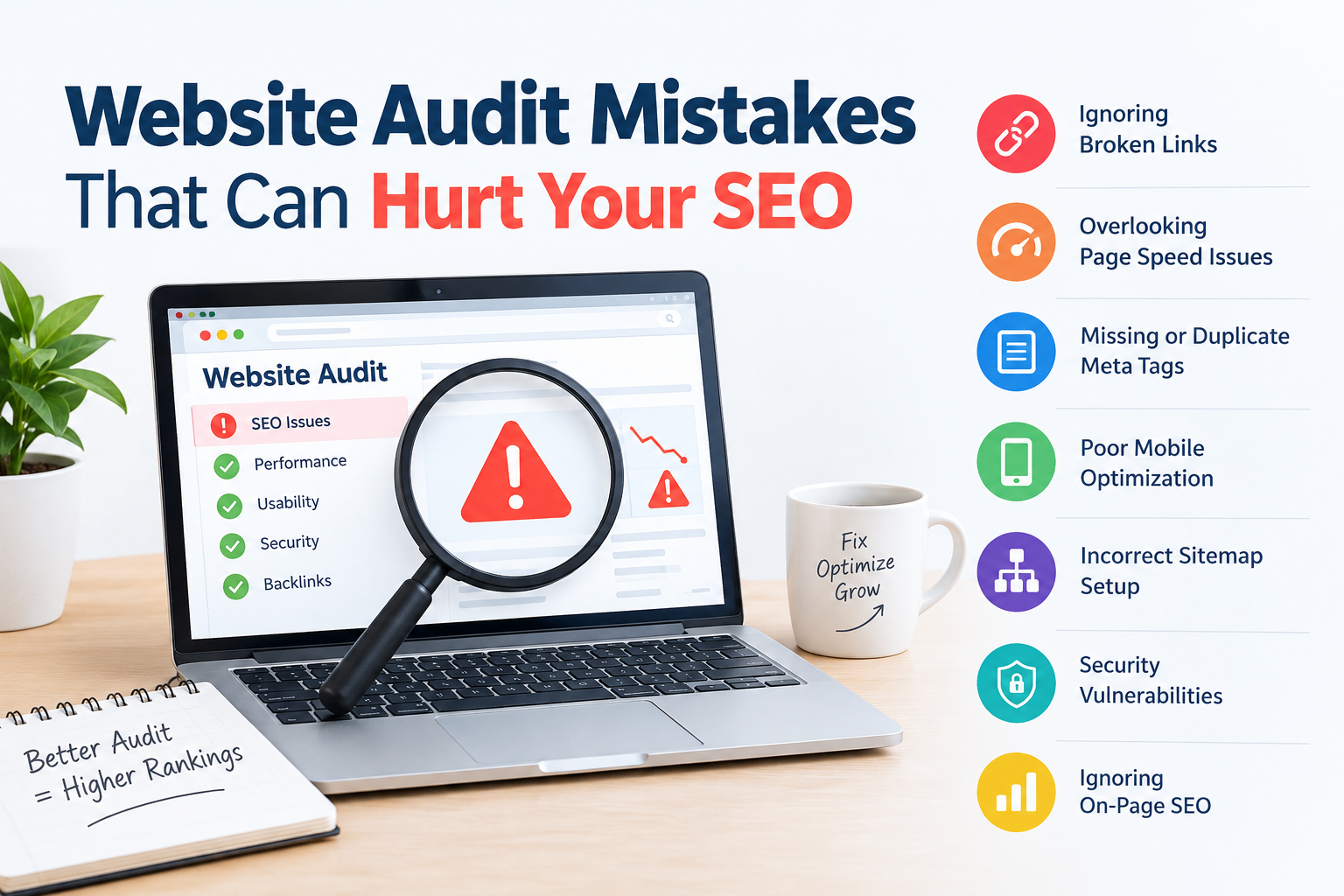
A website audit can reveal problems that’re difficult to notice during everyday website management. However the website audit itself can become less useful if important areas are ignored or findings are poorly prioritized.
Here are 15 common mistakes to avoid.
- Checking keywords
Checking only keywords is a mistake. SEO is more than keywords. Technical health, content quality, links, usability and performance also matter.
- Ignoring crawlability
Ignoring crawlability is a mistake. Search engines need to discover pages. Review robots.txt, links, XML sitemaps and crawl‑related issues.
- Overlooking indexation
Overlooking indexation is a mistake. A page cannot receive search traffic if it is not available for indexing. Check pages for accidental noindex directives and other indexation problems.
- Ignoring links
Ignoring broken links is a mistake. Broken internal links create user experiences and can make website navigation harder.
- Forgetting users
Forgetting mobile users is a mistake. A desktop‑only review can miss mobile usability problems.
- Ignoring page speed
Ignoring page speed is a mistake. Large images, excessive scripts and inefficient resources can contribute to performance.
- Treating metadata as the SEO strategy
Treating metadata as the entire SEO strategy is a mistake. Optimizing titles and descriptions is useful. Metadata alone cannot solve broader SEO problems.
- Ignoring links
Ignoring internal links is a mistake. Internal links help users move between related pages. Help search engines understand relationships between content.
- Publishing content
Publishing thin content is a mistake. Creating short pages without useful information can create a large website without creating much value.
- Ignoring content
Ignoring duplicate content is a mistake. Similar or duplicated pages can make it harder to determine which version should be prioritized.
- Forgetting image optimization
Forgetting image optimization is a mistake. Large images can affect page performance. Review image dimensions, formats, compression and relevant alt text.
- Ignoring user experience
Ignoring user experience is a mistake. A healthy website can still struggle if visitors cannot quickly understand what to do next.
- Reviewing problems without prioritizing them
Reviewing problems without prioritizing them is a mistake. An audit containing 100 findings is not useful if everything is labeled important.
- Failing to check backlinks
Failing to check backlinks is a mistake. A complete SEO review may include examining the website’s backlink profile for quality and relevance.
- Not creating an action plan
Not creating an action plan is a mistake. The final mistake is treating the audit as the finish line. The real value comes from turning findings into actions.
Practical Example
Suppose an audit discovers:
- 5 links
- 200 missing image alt attributes
- 3 important pages blocked from crawling
- slow checkout pages
These issues should not necessarily receive identical priority. Problems affecting pages or the customer journey may deserve attention before lower‑impact cosmetic issues.
Why professional audits can help
Professional auditors can combine automated data with review and business context.
A website audit service can also help turn findings into practical recommendations.
FAQs
What is the biggest website audit mistake?
There is no biggest website audit mistake. Ignoring technical, content, performance or UX problems can all reduce the usefulness of a website audit.
Are automated audits ?
Automated tools are useful for finding patterns. Manual analysis can provide context and help prioritize recommendations.
Can website audit mistakes affect rankings?
Some technical and content problems can affect search visibility although the impact varies by website and issue.
Should every audit problem be fixed?
Not. Prioritize issues based on their impact, urgency and implementation cost.
Internal‑link opportunity: Link professional website audit service and technical website problems, to your website audit service page.


