
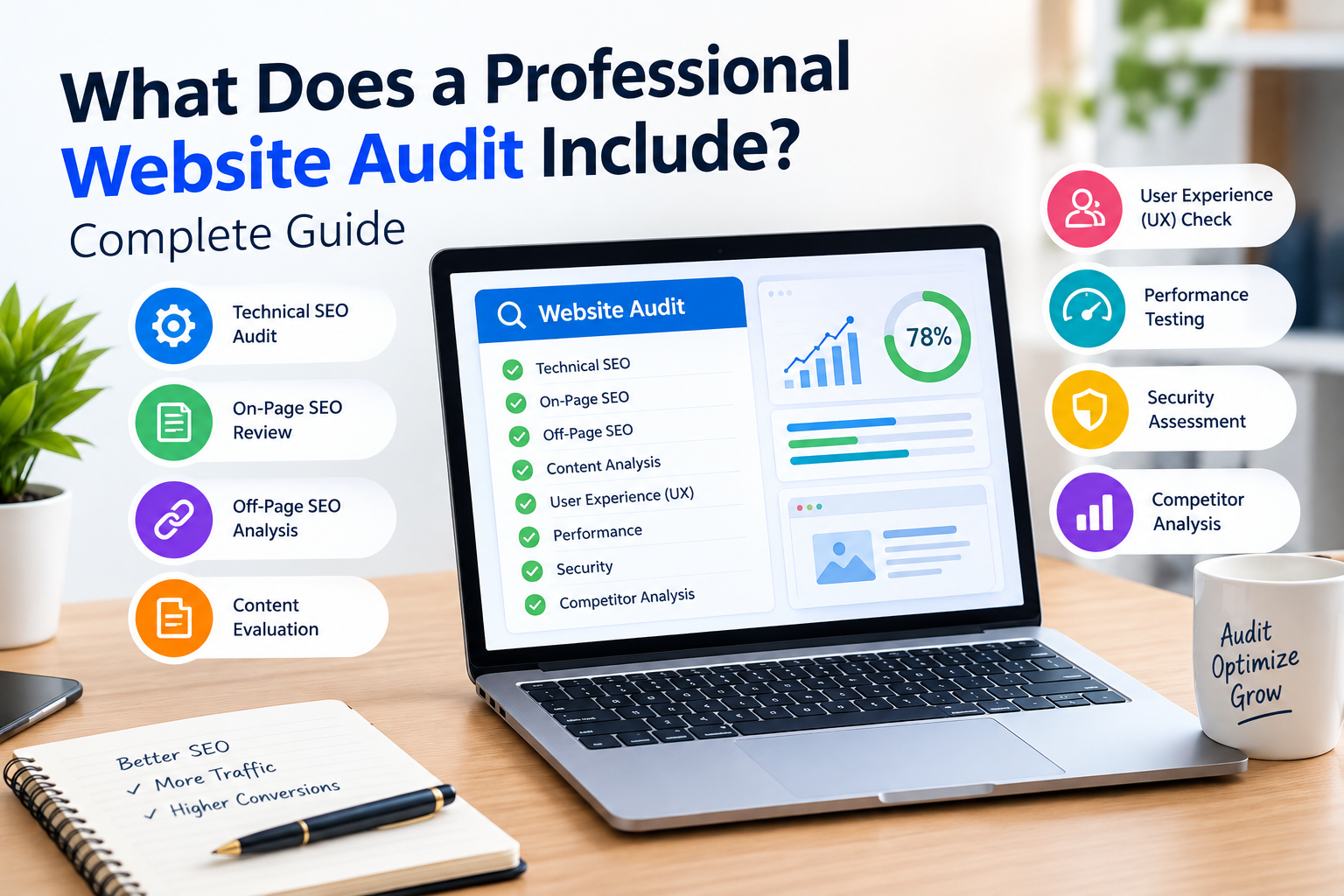
What Does a Professional Website Audit Include?
A professional website audit looks beyond SEO errors. It looks at how your website functions technically how its content works for users and search engines how easy it is to move around and whether important pages are helping your business reach its goals.
A report that is well organized should not just list hundreds of warnings. It should explain which issues are important why they are important and what needs to be done
What Is a Professional Website Audit?
A professional website audit is a look at a websites technical health, SEO, content, performance, usability and overall structure.
Depending on the website and what is being checked the review may cover:
Technical SEO
Website structure
On-page SEO
Content quality
Page speed
Mobile usability
User experience
links
Backlinks
Conversion paths
Opportunities compared to competitors
The exact areas to look at should depend on the size of the website the industry it is in the goals it has and the problems it already has.
What Does a Professional Website Audit Include?
- Technical SEO Audit
A technical SEO check looks at whether search engines can crawl, understand and index important pages.
Common things to check include:
Crawl ability
Indexing
Robots.txt file
XML sitemap
Canonical tags
Redirects
links
404 errors
URL setup
Website structure
Duplicate pages
Technical issues that affect important pages should usually be fixed before smaller optimization problems.
- On-Page SEO Analysis
An on-page check looks at how individual pagesre set up for relevant searches and users.
This can include:
Title tags
Meta descriptions
H1 and H2 headings
Content layout
Keyword relevance
Search intent
Internal links
Image alt text
Page- optimization
The goal is not to add keywords everywhere. Instead each important page should clearly show what it is about.
- Content Audit
Thin content
Old pages
A content audit looks at whether existing pages give relevant information.
It may find:
Duplicate or similar content
Missing topics
Content gaps
Pages that don’t match search intent
Pages that don’t get organic traffic
Not every weak page should be deleted. Some may be updated, merged, redirected or moved.
- Website Performance Analysis
Website speed and performance can affect how people see your website.
A professional check may look at:
Page load speed
Core Web Vitals
images
Too many scripts
Mobile performance
Server issues
Resource loading
Important landing pages should get special attention because performance issues can hurt both usability and sales.
- Mobile Usability Review
A lot of website traffic comes from devices making mobile usability an important area to check.
The review can check:
Responsive designs
Text that’s easy to read
Button sizes
Navigation
Forms
Content visibility
Mobile page performance
A page should work well on the devices that your audience uses.
- User Experience and Conversion Analysis
A website can bring in visitors. Still have trouble getting leads or sales if the user journey is confusing.
A UX check may look at:
Navigation
Page layout
Calls to action
Contact forms
Checkout process
Trust elements
Conversion paths
Accessibility issues
The goal is to find any problems that stop a visitor from doing what you want them to do.
- Internal Linking and Website Structure
Internal links help users and search engines find pages.
An audit can find:
pages with few internal links
Orphan pages
Unclear navigation
Weak topic relationships
Too many or irrelevant links
A clear site structure can make it easier for people and search engines to find what they need.
- Backlink Profile Analysis
A backlink check looks at the links pointing to your website.
It may look at:
Referring domains
Link relevance
Anchor text
Link patterns
bad links
Overall backlink profile
An unfamiliar or low-authority link is not automatically bad so backlink findings should be looked at carefully instead of just being a list of links to remove.
- Competitor and Search Visibility Analysis
Some professional audits also compare your website with similar websites.
This can show chances involving:
Content coverage
Site structure
Search visibility
Keyword topics
Local SEO
User experience
Competitor research should find chances instead of just copying another website.
How Should Website Audit Issues Be Prioritized?
One of the helpful parts of a professional audit is knowing which issues to fix first.
A good way to do this is:
priority: Issues that affect indexing, accessibility, security, important commercial pages or big user problems.
Medium priority: Problems that affect optimization, performance, content quality or usability without stopping access
Low priority: Small improvements that can be done after important issues are fixed.
This helps businesses focus their time and money of trying to fix everything at once.
What Should a Professional Website Audit Report Include?
A good website audit report should turn findings into a plan that can be used.
Executive Summary
The report should clearly explain:
Major problems
opportunities
Priority areas
Recommended next steps
This gives people in charge a quick overview of how the website is doing.
Detailed Findings and Evidence
Each big issue should explain:
What the issue is
Where it happens
Why it matters
How to fix it
Evidence helps make recommendations easier to understand and act on.
Prioritized Action Plan
The report should separate fixes from longer-term changes.
If possible recommendations should include a suggested priority, who’s responsible and the order to do them in.
What Should You Do After a Website Audit?
An audit is the start, not the end.
After getting the report:
Look at the findings
Check the important issues
Decide which to fix first
Assign who will do what
Make the changes
Watch how things go
Check important areas again
Simple issues can be handled by yourself while more complex changes may need an SEO expert or developer.
Automated Website Audit vs. Professional Audit
Automated SEO tools are good for finding warnings fast.
However automated reports may not understand:
Your business goals
Customer journey
Search intent
pages that bring in money
Which problems are most important
If a recommendation fits your website
A professional audit uses technical data along with human thinking and business knowledge.
When Should You Get a Professional Website Audit?
A website audit can be very helpful when:
Organic traffic has gone down
Important pages are not ranking
Your website has issues
You are planning a redesign
You are moving to a new platform
Your website has become hard to manage
Conversions have gone down
You have added many new pages
You want to find SEO chances
Regular checks can help find problems before they get worse.
How to Choose a Website Audit Service
Before hiring a service ask:
What does the audit cover?
Will I get a report?
Are the recommendations ranked?
Does the audit include SEO?
Is content checked?
Is user experience included?
Are important commercial pages looked at?
Will the findings be explained?
Is there support after?
Clear answers can help you know what you are really buying.
Frequently Asked Questions About Website Audits
What is included in a website audit?
A website audit may include SEO, on-page SEO, content, performance, mobile usability, user experience, internal links, backlinks and a look at competitors.
How long does a professional website audit take?
The time depends on the size of the website, how complicated it’s the number of pages the setup and what is being checked. A small website usually takes time than a large e-commerce site.
Can I perform a website audit myself?
Yes. Basic checks can be done with SEO and website tools. Complex websites may need professional help and advice.
Does a website audit guarantee Google rankings?
No. An audit finds problems and chances. Rankings also depend on content, competition, search demand, changes made, links and how well everything is done.
How often should a website be audited?
There is no one schedule that works for all. Regular checks are helpful while full audits may be needed after changes, moves, technical updates or big performance issues.
Turn Your Website Audit Into an Action Plan
A professional website audit should not just give a list of problems. It should give a picture of your websites technical health, SEO, content, performance, usability and overall structure.
The best audit reports explain what needs attention why it is important and what steps should be taken first.
If your website needs a check, in these areas a professional Website Audit Service can start the process of finding problems and planning improvements.


